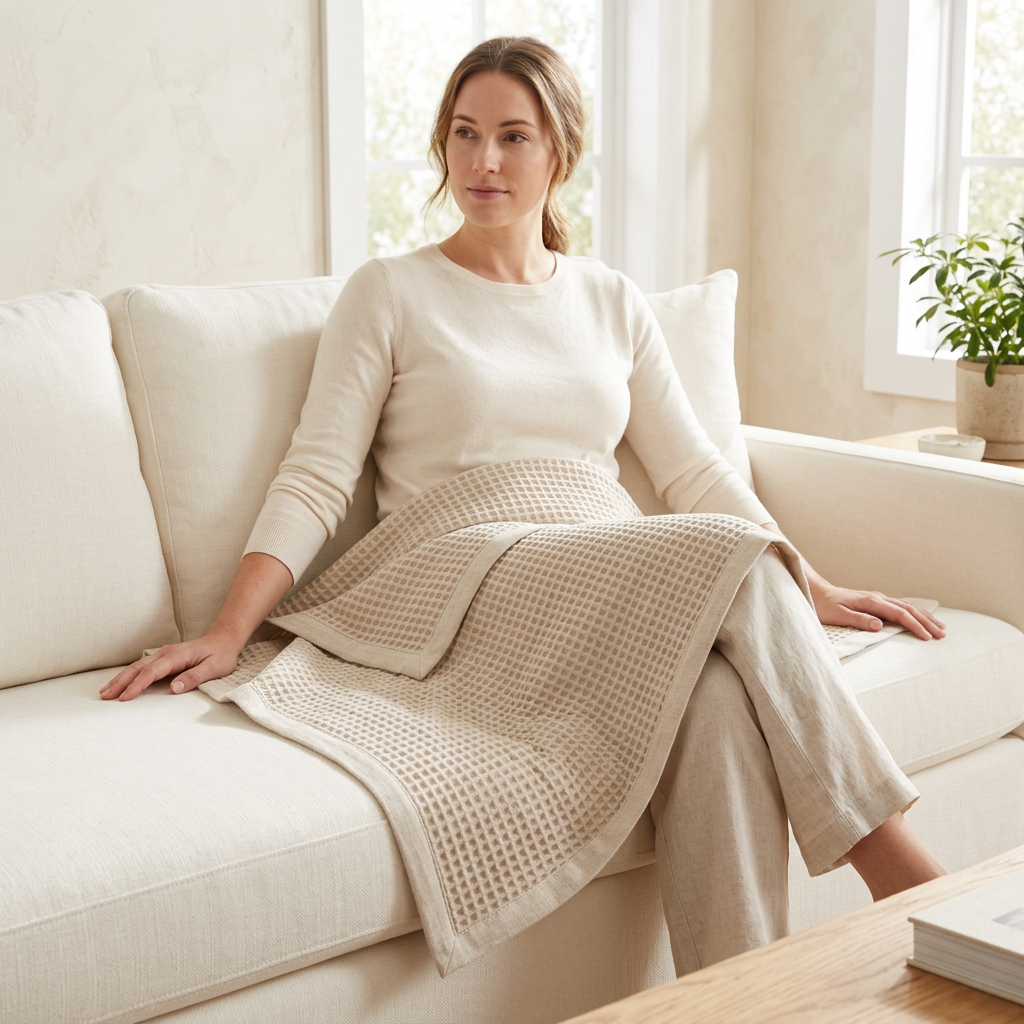
Oatmeal Waffle Textured Throw Blanket With Clean Hemmed Edge Finish
Oatmeal Waffle Textured Throw Blanket With Clean Hemmed Edge Finish
Couldn't load pickup availability

Oatmeal Waffle Textured Throw Blanket With Clean Hemmed Edge Finish
🔲 Small squares, a different room
A room can change without introducing a new color. Set this pale oatmeal throw beside plain upholstery and its recessed waffle grid becomes the detail that draws the eye. The repeating squares give the surface dimension, while a smooth hem frames the pattern with a quieter edge.
This is a study in close contrasts: raised lines beside recessed centers, a regular grid beside relaxed folds, and a warm neutral beside the materials already in your home. There are no tassels or bold stripes to direct the arrangement. The throw's character comes from its surface and the way you choose to place it.
Look closer: the geometry
The waffle pattern is made visually distinct by small, regularly repeated square recesses. Raised boundaries catch the light while the centers appear more shaded, creating a textured field within a single pale shade. Seen close up, the individual cells become clear; viewed across a room, they merge into an understated patterned layer.
The plain hem interrupts that repetition just enough to define the rectangle. It gives the edge a different appearance from the center without adding a contrasting color. Fold a corner back to reveal the meeting of those two surfaces, or leave a broad panel open so the grid remains the focus.

Watch the light, not just the color
Place a textured object near a window and the surface becomes easier to read. With this throw, side light emphasizes the boundaries of the little squares and the folds of the larger fabric panel. In a more evenly lit setting, the overall oatmeal shade takes a quieter role.
You do not need to build the room around one lighting condition. Instead, notice where the texture is most visible in your existing space. A sofa arm near a window, an open chair back or a folded section at the end of a bed can each show a different aspect of the same grid.
Material conversations
Waffle beside smooth upholstery
A plain sofa gives the regular surface pattern a clear background. Drape the throw across one section rather than covering every cushion, leaving a boundary between the grid and the upholstery. That visible transition makes the texture feel intentional without requiring more decorative pieces.
Waffle beside wood
Wood grain and a small square grid create different kinds of lines. Let a folded throw rest on a bench or chair where both remain visible. Pale wood keeps the palette close; a darker finish creates a more distinct frame around the oatmeal fabric.
Waffle beside stone
A smooth tabletop or console offers a more uniform surface next to the recessed pattern. A loose fold can show the hem and several rows of squares at once. Keep the arrangement spare so the contrast comes from texture rather than a collection of competing objects.
Waffle beside plain bedding
On a bed, the throw can introduce a smaller repeating detail over broader areas of plain linen. Fold it across part of the bed end or place it toward one side. Let the actual blanket and bed proportions guide the arrangement rather than expecting a fixed amount of overhang.
Choose a fold by the effect you want
- Broad and open: show a larger area of the grid when the surrounding furniture is simple.
- Folded into a panel: align the hemmed edges for a more ordered outline on a bench or bed end.
- Relaxed over a chair: allow a few natural folds to interrupt the regular squares.
- One corner turned: bring the plain border into view as a small contrast against the textured center.
Keep the fabric away from walkways and furniture mechanisms. A throw can look relaxed without trailing beneath feet or getting caught under a chair.

A palette without an exact match
With ivory: the oatmeal shade gives gentle definition while keeping the room light. Use the difference in surface texture to separate the throw from pale cushions or upholstery.
With grey: the warmer neutral can provide a subtle counterpoint to a cooler sofa or chair. Introduce another warm detail, such as a wood table, if you want to carry that relationship through the room.
With muted green: a restrained sage cushion or an existing plant brings another color family into the setting. Leave the rest of the combination simple so the small grid remains readable.
With deeper browns: let the pale throw become a light accent rather than trying to blend it into the furniture. A broad visible panel emphasizes both the color contrast and the texture.
From arrangement to ordinary use
Imagine an afternoon with no elaborate plan: a seat by the window, a cup on the table and a few pages left in a book. The throw starts on the sofa back, then moves to your lap as you settle in. Its neat grid becomes part of a lived-in scene rather than something that has to stay perfectly arranged.
When you stand, fold it once and leave the hem visible over the armrest. Later you might carry it to another chair or change the fold at the bed end. A familiar object can give different corners of the home a connected detail without making them look identical.
The clear details
- One rectangular throw blanket in a pale oatmeal shade.
- Repeating recessed square waffle texture.
- Plain hemmed borders and squared corners.
- Fringe-free finish without decorative tassels.
- A single-piece accent for your own sofa, chair or bed arrangements.
Keep the surface considered
Lift the throw with support across its width rather than pulling it from a single corner. Keep sharp jewelry, hook fastenings and exposed zippers away from the textured surface. Fold it neatly for storage when it is not being used.
Follow the attached care label for cleaning, drying and ironing instructions. The appearance of a waffle texture alone does not determine the right washing method.
Your purchase includes one oatmeal waffle throw blanket only. Furniture, cushions, bedding, clothing, cups and other scene accessories are not included. Choose a spot where the little squares can catch the light, then let the rest of the room tell its own story.